


Ferrosilicon Prices in 2026: Why Buyers Are Watching the Market Closely
The international ferrosilicon market has entered 2026 with a more complicated pricing environment than a simple supply-and-demand comparison suggests. Ferrosilicon is closely connected with steelmaking, foundry production, electricity consumption, raw-material costs and international logistics. As a result, buyers may see different quotations even when suppliers offer the same nominal grade.
For procurement teams, the important question is not simply "What is the ferrosilicon price per ton?" A more useful question is: What specification, trade term, delivery schedule and market basis does that price represent?
This distinction becomes particularly important when comparing FeSi72 and FeSi75. Both grades are widely traded, but their silicon content, impurity limits, particle size and application requirements can lead to different transaction prices.
Recent 2026 market references show that Chinese export quotations for standard ferrosilicon have been substantially different from prices reported in Europe or North America. One July 2026 reference placed FeSi72 at around USD 1,150–1,170/MT FOB Tianjin and FeSi75 at around USD 1,190–1,210/MT FOB Tianjin. These numbers should be treated as market benchmarks rather than guaranteed executable offers because actual quotations depend on specifications and shipment conditions.
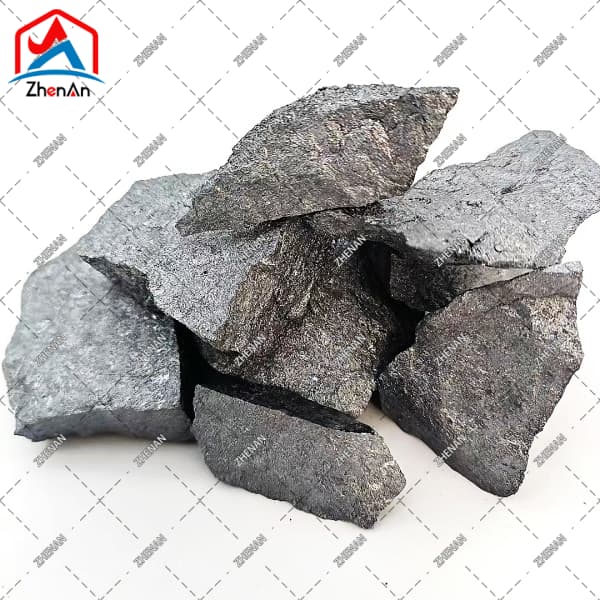
What Is Ferrosilicon?
Ferrosilicon, commonly abbreviated as FeSi, is a ferroalloy mainly composed of iron and silicon. Commercial grades are generally identified according to their silicon content, with FeSi65, FeSi70, FeSi72 and FeSi75 among the grades encountered in international trade.
The material is primarily consumed in steelmaking and foundry operations.
In steel production, ferrosilicon performs several important functions:
Deoxidizer
- Silicon alloying agent
- Source of silicon during steel refining
- Supporting material-property control
- Inoculant component in selected cast iron applications
The importance of ferrosilicon means that its price does not develop independently from the steel industry.
When steel mills increase production and purchasing activity improves, demand for ferroalloys can strengthen. When steel production slows or mills reduce inventories, ferrosilicon purchasing can become more cautious.
The Main Factors Behind the 2026 Ferrosilicon Price Trend
1. Electricity Costs
Electricity is one of the most important production-cost variables for ferrosilicon manufacturers.
Ferrosilicon is produced in electric submerged arc furnaces. The production process requires substantial electrical energy, meaning electricity prices can directly affect smelting costs.
If electricity prices increase, high-cost furnaces may reduce production or require higher selling prices to maintain margins.
Conversely, lower power costs can improve the competitiveness of producers and place pressure on market prices.
This is one reason buyers should monitor not only steel demand but also energy conditions in major producing regions.
2. Silicon and Carbon Raw Materials
Ferrosilicon production also depends on raw materials such as quartzite or other silicon-bearing materials, reductants and carbon materials.
The cost and quality of these inputs influence the final production economics.
However, raw-material costs do not necessarily move at the same speed as ferrosilicon prices.
A producer may temporarily accept lower margins if inventory is high or if market competition is intense. On the other hand, when raw-material costs rise together with strong downstream demand, suppliers may have greater ability to increase quotations.
3. Steel Production
The relationship between ferrosilicon demand and steel production is fundamental.
Ferrosilicon is consumed across carbon steel, alloy steel, stainless steel and other metallurgical applications. Market research continues to identify steelmaking and foundry consumption as major demand drivers for the ferrosilicon market.
For buyers, this means that a ferrosilicon price forecast should never be based solely on historical FeSi prices.
Instead, procurement teams should monitor:
- Crude steel production
- Electric arc furnace activity
- Stainless steel output
- Foundry production
- Steel mill tender activity
- Ferroalloy inventories
- Export demand
FeSi72 vs FeSi75: Why Are the Prices Different?
FeSi72 and FeSi75 are two common commercial grades.
The basic difference is silicon content:
| Grade | Typical Silicon Content | Common Position |
|---|---|---|
| FeSi72 | ≥72% Si | Standard industrial grade |
| FeSi75 | ≥75% Si | Higher-silicon grade |
However, silicon content is only one part of the quotation.
A buyer should also examine:
- Aluminum content
- Calcium content
- Carbon content
- Phosphorus
- Sulfur
- Particle size
- Fines percentage
- Moisture
- Packaging
- Quantity
- Origin
- Incoterm
For example, a low-aluminum FeSi75 product may command a premium over ordinary FeSi75 because the producer must control raw materials and furnace conditions more tightly.
Therefore, two products both described as "FeSi75" should not automatically be considered identical.
How to Read a Ferrosilicon Export Quotation
A professional ferrosilicon quotation should contain enough information for the buyer to understand exactly what is being offered.
A useful quotation should identify:
Product: Ferrosilicon
Grade: FeSi72 / FeSi75
Si: Minimum percentage
Al: Maximum percentage
C: Maximum percentage
P: Maximum percentage
S: Maximum percentage
Size: For example 10–60 mm
Packing: 1 MT jumbo bag or other agreed packing
Quantity: Metric tons
Price: USD/MT
Trade term: FOB / CFR / CIF
Loading port: Clearly stated
Payment: T/T or L/C
Shipment: Estimated loading period
Inspection: Agreed inspection standard
Without these details, a price comparison can easily become misleading.
What Does FOB Price Mean?
FOB ferrosilicon price means the quoted price generally covers the product and costs associated with bringing the cargo onto the vessel at the named loading port, while international freight and certain destination-side costs are handled separately according to the agreed Incoterms.
For international buyers, comparing FOB offers can be useful because it provides a relatively clear basis for comparing suppliers from different origins.
However, the buyer must still calculate:
- Ocean freight
- Marine insurance where applicable
- Import duty
- Port charges
- Customs clearance
- Inland transportation
- Financing cost
A lower FOB quotation does not necessarily result in the lowest landed cost.
2026 Ferrosilicon Market Outlook
Current market research suggests that the global ferrosilicon market continues to expand gradually rather than experiencing explosive structural growth. One 2026 market estimate places the global market at approximately USD 12.5 billion, with longer-term growth supported by steel and foundry applications.
At the same time, the market remains exposed to short-term volatility.
The key variables to watch are:
- Steel mill purchasing
- Electricity prices
- Furnace operating rates
- Producer inventories
- Export demand
- Freight rates
- Regional trade measures
- Currency movements
For Europe in particular, trade policy has become an additional factor. The EU's ferro-silicon safeguard framework introduced in November 2025 has created another variable for importers when evaluating European landed costs and supply planning.
How Buyers Should Plan Ferrosilicon Purchases
Instead of attempting to predict the exact bottom of the market, many industrial buyers can use a staged purchasing strategy.
For example, a buyer requiring 500 MT may divide procurement into several shipments rather than committing the entire volume at one price point.
This can reduce the risk of buying the complete requirement immediately before a market correction.
At the same time, buyers should avoid waiting indefinitely for the lowest possible price. If production costs rise or supply tightens, the market can move upward before the next purchasing cycle.
The most practical approach is to combine:
Price + specification + supplier reliability + delivery time + landed cost.
Ferrosilicon Packaging for Export
Standard export ferrosilicon packaging commonly uses strong woven jumbo bags, often around 1 metric ton per bag, although exact packing can be customized according to customer requirements and transportation conditions.
Packaging should protect the alloy from:
- Rain
- Humidity
- Contamination
- Bag damage
- Excessive handling loss
For long-distance shipments, buyers should confirm whether bags are suitable for container loading and whether additional palletization or liner bags are required.
Ferrosilicon Storage Requirements
Although ferrosilicon is a relatively stable ferroalloy, proper storage is still important.
The recommended storage environment should be:
- Dry
- Covered
- Well ventilated
- Protected from rain and standing water
- Away from chemicals and contaminants
Bags should be placed on a clean floor or suitable pallets rather than directly on wet ground.
Moisture management is particularly important during long storage periods because wet or contaminated material can create handling problems and may affect the consistency of charging operations.
FAQ: Ferrosilicon Price and Market
1. What is the current ferrosilicon price?
There is no single global ferrosilicon price. Market references vary by grade, origin, specification, trade term and delivery location. Recent 2026 references for Chinese exports have placed FeSi72 and FeSi75 in the approximate USD 1,150–1,210/MT FOB Tianjin range, but buyers should request a current quotation before placing an order.
2. What is FeSi75?
FeSi75 is a ferrosilicon grade containing approximately 75% silicon or meeting the buyer's specified minimum silicon requirement.
3. Is FeSi75 more expensive than FeSi72?
Usually, higher silicon content can support a higher price, but the actual premium depends on market conditions and impurity requirements.
4. What affects ferrosilicon prices most?
Steel demand, electricity costs, production rates, raw-material costs, inventories and logistics are among the major factors.
5. Why do two FeSi75 suppliers quote different prices?
Their specifications, aluminum limits, size distribution, origin, packing, quantity, payment terms and shipment dates may be different.
6. What is FOB Tianjin?
It is an export quotation basis using Tianjin as the named loading port.
7. Is the published market price the same as a supplier quotation?
No. Published prices are usually benchmarks. An executable quotation must consider the actual specification and shipment requirements.
8. What particle size is commonly used?
Common lump sizes include ranges such as 10–60 mm, but exact sizing should follow the customer's production process.
9. Can ferrosilicon be supplied in bulk?
Yes, depending on transportation and handling requirements. Jumbo bags are widely used for international shipments.
10. How should ferrosilicon be stored?
Store it in a dry, covered and clean warehouse protected from rain and excessive humidity.
11. Does electricity affect FeSi prices?
Yes. Ferrosilicon production is electricity-intensive, so power costs can materially influence production economics.
12. Is ferrosilicon mainly used in steelmaking?
Steelmaking is its largest and most important application, although foundries and other metallurgical operations also consume ferrosilicon.
13. What information should I provide when requesting a quotation?
Provide grade, chemical composition, particle size, quantity, packaging, destination, Incoterm and expected delivery schedule.
14. Is the lowest FeSi price always the best offer?
No. A low quotation may come with different chemistry, higher impurity levels, unfavorable packing or longer delivery.
15. How can buyers reduce price risk?
Buyers can monitor market indicators, compare landed costs and consider staged purchasing rather than relying on a single market prediction.
Conclusion
The 2026 ferrosilicon price trend is being shaped by several forces rather than one dominant factor. Steel demand remains central, but electricity costs, production economics, inventories, logistics and regional trade policies are becoming increasingly important.
For buyers of FeSi72 and FeSi75, the most reliable purchasing decision is therefore not based on the headline price alone. A complete comparison should include chemistry, sizing, packaging, Incoterms, freight, delivery schedule and supplier consistency.
A supplier quotation is most useful when it tells the buyer exactly what is being purchased and how much the material will cost after delivery.
Market-price figures in this article are indicative references rather than binding offers. Actual quotations should be confirmed with the supplier according to the required specification, quantity, shipment date and destination.