


2026 Ferrosilicon Market Outlook
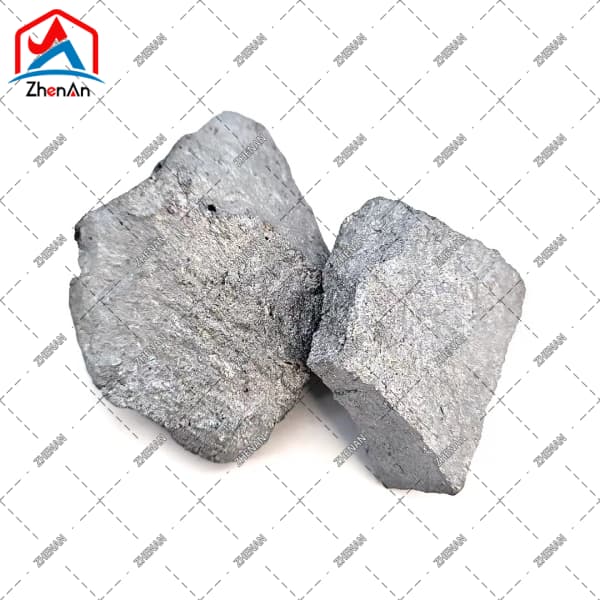
The ferrosilicon market in 2026 is being influenced by a combination of traditional metallurgical demand and increasingly complex international supply conditions.
Ferrosilicon is not an isolated commodity. Its consumption is closely connected with steel production, foundry activity and alloy manufacturing. At the same time, its production depends heavily on electricity and access to suitable raw materials.
This creates an interesting market structure: demand is largely driven by downstream metal production, while supply economics are heavily influenced by energy costs.
Global market studies continue to project moderate long-term growth. Grand View Research estimates the global ferrosilicon market at approximately USD 12.3 billion in 2026, with steelmaking and cast-iron applications among the key demand drivers.
The more important question for buyers, however, is what these broad market numbers mean for actual purchasing.
Why Ferrosilicon Remains Important to Steelmakers
Ferrosilicon is widely used as a deoxidizing and alloying material.
During steelmaking, oxygen dissolved in molten steel can negatively affect quality. Silicon has a strong affinity for oxygen and can therefore contribute to the deoxidation process.
Ferrosilicon also introduces silicon into the steel chemistry.
Depending on the steel grade, silicon can contribute to:
- Deoxidation
- Strength improvement
- Electrical properties
- Alloy composition control
- Metallurgical consistency
This makes FeSi an important consumable for steel plants.
The exact consumption rate varies according to steel grade, furnace practice, raw-material chemistry and the desired final composition.
Steel Demand Remains the Main Market Driver
When analyzing the ferrosilicon market outlook, steel production should be one of the first indicators to monitor.
More steel production generally creates more opportunities for ferroalloy consumption.
However, the relationship is not perfectly linear.
A steel mill can change its ferroalloy consumption ratio through:
- Improved furnace control
- Changes in steel grades
- Alternative alloying materials
- Changes in deoxidation practice
- Inventory adjustments
Therefore, analysts should consider both steel output and purchasing behavior.
For example, a steel producer may maintain high production while reducing ferroalloy purchases temporarily because it already holds sufficient inventory.
This is why spot-market prices sometimes fall even when the broader steel industry appears stable.
Ferrosilicon Supply: Why Production Capacity Matters
Ferrosilicon is produced in electric furnaces operating at high temperatures.
The production process requires:
- Silicon-bearing raw materials
- Carbonaceous reducing materials
- Electricity
- Furnace equipment
- Skilled operating control
Because the process is energy-intensive, production economics differ significantly between regions.
A producer with access to relatively competitive electricity may remain profitable at a lower market price than a producer operating under higher energy costs.
This creates a natural market floor.
When prices fall below the sustainable cost of high-cost production, some producers may reduce furnace utilization or temporarily shut down capacity.
That reduction can eventually support price recovery.
Electricity: The Cost Factor Buyers Should Not Ignore
Many buyers focus on quartz, carbon materials and freight when discussing ferrosilicon prices.
Electricity deserves equal attention.
A large change in power costs can materially affect the economics of smelting.
This is particularly relevant in regions where electricity markets are volatile or where environmental and energy policies influence industrial power pricing.
For procurement professionals, monitoring power costs can therefore provide useful information about the potential direction of ferrosilicon offers.
FeSi72 and FeSi75 Market Position
FeSi72 and FeSi75 are widely used grades in international trade.
FeSi72 offers a balance between silicon content and cost, while FeSi75 provides a higher silicon contribution per unit of alloy.
The choice depends on the buyer's metallurgical process.
A procurement team should not automatically assume that FeSi75 is always more economical simply because it contains more silicon.
The relevant calculation is often:
Cost per effective unit of silicon delivered to the plant.
This calculation can change depending on:
- Product price
- Silicon recovery
- Impurity limits
- Furnace practice
- Transportation
- Handling losses
Global Trade Is Becoming More Important
The international ferrosilicon trade is increasingly influenced by regional market conditions.
A supplier in Asia may face different electricity and raw-material costs from a European producer.
At the same time, a European buyer may evaluate an Asian supplier based not only on FOB price but also on:
- Ocean freight
- Import duties
- Safeguard measures
- Port charges
- Delivery time
- Currency risk
This is why a global ferrosilicon market cannot be understood through one regional price index.
Europe: Trade Policy Adds Another Variable
European buyers have an additional issue to consider.
The European Union introduced ferro-silicon safeguard measures in November 2025, creating a tariff-rate quota structure for certain imports. The measure is scheduled to operate through November 2028.
For buyers, this means the effective landed cost can depend on more than the supplier's FOB quotation.
A purchasing team should check the applicable trade rules before finalizing a large contract.
This is particularly important for long-term contracts where market conditions or quota availability may change during the contract period.
Ferrosilicon Applications Beyond Conventional Steelmaking
Although steelmaking is the largest application area, ferrosilicon applications extend into foundry and specialty metallurgical operations.
In cast iron production, ferrosilicon can be used as an inoculant or as part of inoculation practice.
Its role can include supporting:
- Graphite formation
- Microstructure control
- Casting consistency
- Reduction of chill tendency
The actual effect depends on the alloy, inoculant formulation, treatment method and process conditions.
This means a buyer purchasing FeSi for foundry applications may have different requirements from a steel mill purchasing bulk FeSi75.
How Market Participants Evaluate the Ferrosilicon Market
Professional buyers normally watch several indicators simultaneously.
Supply-side indicators
- Furnace operating rates
- Electricity costs
- Producer margins
- Raw-material availability
- Factory inventory
- Export availability
Demand-side indicators
- Steel production
- Foundry activity
- Steel mill tenders
- Inventory replenishment
- Stainless steel output
- Alloy steel production
Trade indicators
- Export prices
- Freight rates
- Currency movements
- Import policies
- Tariffs and quotas
Using several indicators is more reliable than relying on one market headline.
Ferrosilicon Procurement Strategy for 2026
The biggest mistake in ferroalloy procurement is often treating price as the only variable.
A professional procurement strategy should evaluate:
Price → Quality → Availability → Freight → Delivery → Risk
For example, Supplier A may offer FeSi75 at USD 1,180/MT FOB.
Supplier B offers USD 1,200/MT.
At first glance, Supplier A appears cheaper.
But if Supplier A requires 45 days for shipment while Supplier B can ship within 10 days, the apparent USD 20/MT saving may become meaningless if the steel plant needs material immediately.
Similarly, if Supplier A has a higher aluminum limit than Supplier B, the cheaper product may not be suitable for the buyer's production process.
Packaging and Export Handling
For international shipment, ferrosilicon packaging must be considered as part of the purchasing specification.
Typical bulk export arrangements use heavy-duty jumbo bags, often around 1 MT per bag.
Depending on the customer's warehouse and feeding system, buyers may request:
- Jumbo bags
- Small bags
- Palletized packing
- Custom bag weights
- Container loading
- Bulk shipment
The packaging should be discussed before the final quotation because packaging requirements can affect both cost and container utilization.
Storage of Ferrosilicon
Proper ferrosilicon storage helps preserve material quality and reduces handling problems.
Recommended practices include:
- Keep bags under a roof
- Avoid direct contact with wet floors
- Protect material from rain
- Maintain a clean warehouse
- Keep different grades clearly separated
- Avoid mixing different particle sizes
- Use FIFO inventory management when appropriate
A warehouse should also maintain clear identification of:
Grade + batch + production date + quantity + supplier
This becomes particularly important when a plant stores FeSi72 and FeSi75 simultaneously.
Ferrosilicon Market Outlook: Bullish or Bearish?
It is difficult to describe the entire 2026 market with one word.
The market has both supportive and negative factors.
Potential bullish factors
- Higher steel production
- Rising electricity costs
- Furnace production cuts
- Lower producer inventories
- Strong export demand
- Higher logistics costs
Potential bearish factors
- Excess production capacity
- Weak steel demand
- High inventories
- Aggressive producer competition
- Lower raw-material costs
- Weak downstream purchasing
The final price direction will depend on which factors become dominant.
FAQ: Ferrosilicon Market Outlook
1. What is the outlook for the ferrosilicon market in 2026?
The market is expected to experience moderate long-term growth while remaining sensitive to steel demand, production costs, energy prices and regional trade conditions.
2. What industry consumes the most ferrosilicon?
Steelmaking is the most important end-use sector.
3. Why does steel production affect FeSi prices?
Steel mills consume ferrosilicon for deoxidation and alloying, so changes in steel production can affect demand.
4. Is ferrosilicon an energy-intensive product?
Yes. Electric furnace smelting makes electricity an important component of production economics.
5. What is the difference between FeSi72 and FeSi75?
The principal difference is the minimum silicon content, although complete specifications also include impurity limits and sizing.
6. Does FeSi75 always have a higher price?
Not necessarily. The price difference depends on supply, demand, production costs and specification.
7. What is the main application of ferrosilicon?
Its primary application is in steelmaking, especially as a deoxidizer and silicon alloying material.
8. Is ferrosilicon used in cast iron?
Yes. It can be used in foundry operations and inoculation practices.
9. What determines the export price?
Grade, chemistry, size, quantity, origin, packaging, Incoterm, freight and market conditions all contribute.
10. Why are European prices different from Chinese prices?
Regional production costs, demand, freight, duties, quotas and market structure can create significant differences.
11. How should imported FeSi be stored?
Keep it dry, covered and protected from rain, contamination and excessive humidity.
12. What packing is common for export?
Heavy-duty jumbo bags are commonly used for bulk international shipments, although customized packing is possible.
13. What information should be included in a purchase contract?
The contract should specify grade, chemical composition, particle size, quantity, packing, price basis, shipment terms, inspection and payment terms.
14. Can market prices change quickly?
Yes. Ferroalloy prices can respond quickly to changes in steel purchasing, electricity costs, supply and logistics.
15. What should buyers monitor before placing a large order?
Monitor steel demand, supplier inventory, production availability, current export offers, freight and applicable import regulations.
Final Purchasing View
The 2026 ferrosilicon market is best understood as a chain connecting electricity, raw materials, furnace production, steelmaking, international trade and logistics.
For buyers, the most useful market analysis is not simply a prediction that prices will rise or fall.
The better approach is to identify why the market may move, determine which variables are changing, and then adjust purchasing timing accordingly.
For FeSi72 and FeSi75, a supplier's current executable quotation should always be checked against the exact specification and delivery conditions.
All market information should be treated as an indicative reference. Actual prices may vary according to grade, chemistry, quantity, origin, packaging, shipment date, destination and applicable trade measures.