


Silicon Metal Grades, Specifications, Price & U.S. Buyer Guide
Silicon Metal: Grades, Specifications, Production, Pricing, Applications & U.S. Buyer Guide
Silicon metal is a critical industrial material used across aluminum alloys, silicones, silanes, polysilicon-related supply chains, specialty chemicals and emerging battery applications. For professional buyers, the most important question is not simply "How much silicon is in the material?" but whether the grade, impurity profile, particle size, traceability and delivery documentation match the downstream process.
Silicon Metal Buyer Snapshot
- Common commercial grades: 553, 441, 3303, 2202 and higher-purity customized grades.
- Main alloying elements: Si with controlled Fe, Al, Ca and other trace impurities.
- Primary production route: carbothermic reduction of quartz or silica in submerged electric arc furnaces.
- Main applications: aluminum alloys, silicone chemicals, silanes, polysilicon-related processes and specialty materials.
- Key procurement documents: COA, SDS, packing list, commercial invoice and origin documentation where required.
- Recommended buyer approach: compare suppliers against the same chemical, size, packaging and inspection specification.
Silicon Metal Grades & Technical Specifications
Commercial silicon metal grades are commonly identified by nominal silicon content and, more importantly, by the maximum levels of critical impurities. In international trade, designations such as 553, 441, 3303 and 2202 are widely used as commercial shorthand. However, buyers should not assume that one grade code represents an identical chemical specification from every producer. Contract specifications should always define the actual limits.
For U.S. purchasing teams, the most useful way to evaluate a grade is to look at the complete impurity profile rather than the Si number alone. Iron, aluminum and calcium are especially important for many aluminum-alloy and chemical applications, while sodium, potassium, boron and other trace elements can become important when the material enters a more sensitive downstream process.
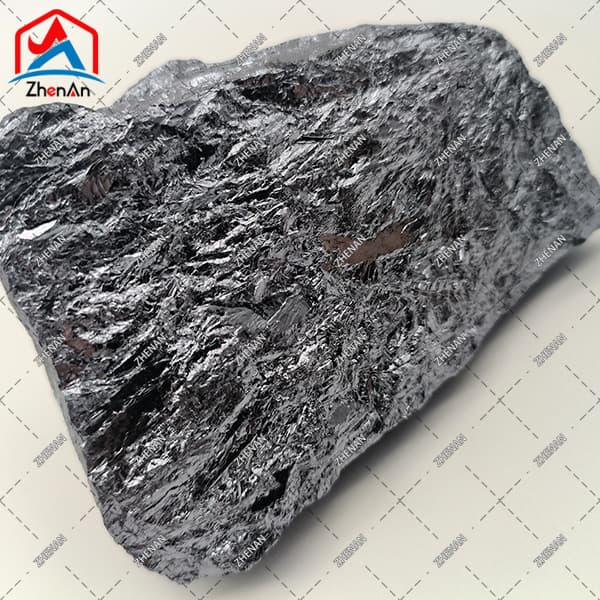
| Commercial Grade / Description | Typical Si Range | Typical Procurement Focus | Typical Application |
|---|---|---|---|
| 553 | About 98% Si | Controlled Fe / Al / Ca according to contract | Aluminum alloys, general metallurgy |
| 441 | About 99% Si | Lower impurity levels than standard 553 | Aluminum alloys, chemical applications |
| 3303 | About 99% Si | Lower Fe, Al and Ca requirements | Chemical and higher-purity industrial uses |
| 2202 | About 99% Si | Tighter impurity control | Selected chemical and high-purity applications |
| High-purity / customized | 99%+ depending on specification | Application-specific trace-element limits | Specialty chemicals and advanced materials |
The following table is an illustrative procurement framework, not a universal international standard. Exact limits should be written into the purchase contract and confirmed by the supplier's COA.
| Parameter | Typical Buyer-Controlled Range | Why It Matters |
|---|---|---|
| Si | Approximately 98–99%+ depending on grade | Primary specification and application suitability |
| Fe | Often controlled from below 0.5% to much lower levels | Important for aluminum and chemical applications |
| Al | Often controlled from below 0.5% to lower levels | Can affect downstream alloy or chemical performance |
| Ca | Often controlled below approximately 0.3–0.5% in standard commercial grades | Important for alloy chemistry and chemical processing |
| B | Application-specific ppm limit | Critical for high-purity and semiconductor-related applications |
| Na / K | Application-specific ppm limit | Relevant to sensitive chemical and advanced-material processes |
For a serious procurement contract, the buyer should request lot-level traceability, including batch number, production date or campaign, sampling date, analytical method and corresponding COA. Chemical analysis can use techniques such as XRF for routine elemental screening and ICP-OES for more detailed elemental determination where appropriate. The method should be suitable for the concentration range being measured.
Sampling should be representative of the entire shipment rather than taken from a single convenient bag or container. Buyers should define the number of increments, composite-sample procedure, particle-size preparation and referee laboratory procedure before shipment. A complete procurement package may include a Certificate of Analysis, Certificate of Origin, SDS, packing list and independent inspection report.
U.S. Buyer Tip: Ask for the Specification Before Asking for the Price
A low quoted price is difficult to compare if one supplier is offering 553 material with relatively broad impurity limits while another is quoting a tighter 441 or 3303 specification. Send every supplier the same chemical and physical specification first, then compare the resulting offers.
Production Processes, Plant Technologies & Emissions
Most industrial silicon metal is produced by reducing silica-rich raw materials with carbonaceous reducing agents in an electric furnace. The conventional route is a carbothermic reduction process in a submerged electric arc furnace. Quartz or other silica-bearing feed is combined with carbon materials such as petroleum coke, coal, charcoal or wood-derived carbon depending on the plant's technology and target product.
The process involves several interconnected stages: raw-material preparation, proportioning, furnace charging, high-temperature reduction, tapping, refining or slag separation where applicable, cooling, crushing, screening and packaging. The exact furnace design and charge recipe strongly influence energy efficiency and impurity transfer.
| Process Factor | Typical Industrial Consideration | Effect on Product |
|---|---|---|
| Quartz / silica quality | High SiO₂ and controlled mineral impurities | Influences final Fe, Al, Ca and trace-element profile |
| Reductant selection | Coke, coal, charcoal and mixed carbon sources | Changes furnace permeability, reaction behavior and impurity input |
| Electrical input | High-temperature electric reduction | Strongly affects production cost and carbon intensity |
| Furnace temperature | Extremely high reaction-zone temperature | Controls reaction kinetics and silicon recovery |
| Charge permeability | Particle-size distribution and burden structure | Affects gas flow, furnace stability and energy efficiency |
Energy consumption varies significantly by plant design, raw materials, furnace operation, silicon recovery and local electricity conditions. For commercial procurement, buyers should be cautious about treating a single kWh-per-ton number as a universal benchmark. A more meaningful supplier assessment combines specific electricity consumption, silicon recovery, furnace utilization, production yield and product impurity profile.
Industrial plants also manage emissions associated with furnace off-gas, carbon-containing reductants and material handling. Depending on the plant configuration, environmental controls can include enclosed furnace systems, gas collection, baghouse filtration, heat recovery, improved raw-material screening and process optimization.
Where Energy Efficiency Can Improve
For an existing plant, several operational improvements can reduce the energy required per ton of saleable silicon. These include improving raw-material consistency, controlling furnace charge permeability, reducing excessive fines, optimizing electrode operation, improving silicon recovery and recovering useful heat from furnace off-gas where technically and economically feasible.
From a U.S. buyer's perspective, the most useful environmental questionnaire is therefore not simply "What is your CO₂ footprint?" It should ask for the calculation boundary, electricity source, production period, methodology, energy consumption per ton and whether the figure covers only furnace electricity or the full product life cycle.
Market Dynamics, Pricing Drivers & Major Suppliers
The international silicon metal market is influenced by several demand centers. Aluminum alloy production is one of the largest industrial uses, while silicone chemicals, silanes, polysilicon-related industries and emerging advanced-material applications add further demand.
On the supply side, China remains a major global production center, while other producing regions contribute to the international supply chain. For U.S. buyers, the relevant question is not only which country produces the material, but whether the specific producer can meet the required grade, origin, documentation, volume and trade-compliance requirements.
What Moves Silicon Metal Prices?
- Electricity costs: silicon metal is an electricity-intensive material.
- Quartz and carbon reductant costs: raw-material availability affects conversion economics.
- Aluminum demand: changes in foundry and alloy production can influence consumption.
- Chemical demand: silicone and silane markets can create additional pressure on certain grades.
- Plant maintenance: furnace shutdowns can temporarily reduce available supply.
- Environmental restrictions: production constraints can affect regional availability.
- Freight: ocean rates, port congestion, container availability and inland transportation affect delivered cost.
- Trade measures: duties and trade-remedy actions can materially change landed cost.
For U.S. importers, trade-remedy status must be checked by country of origin, producer/exporter and applicable HTS classification. This is particularly important because the U.S. Department of Commerce announced final affirmative AD/CVD determinations in 2026 involving silicon metal from several countries, including Australia, Norway, Angola, Laos and Thailand. The exact applicable treatment should be verified against current Commerce and U.S. Customs information at the time of entry.
How U.S. Buyers Should Compare Suppliers
A practical RFQ should request the same grade and chemistry from at least several qualified sources. Ask each supplier to quote on the same basis: FOB, CFR or CIF, particle size, packaging, quantity, inspection terms and payment terms.
For the first commercial transaction, buyers should request a representative sample, recent COA and, where appropriate, an independent third-party test. The independent result should be compared against the supplier's COA using the same or technically comparable analytical method.
| Contract Item | Recommended Buyer Requirement |
|---|---|
| Grade | Explicit grade plus complete chemistry |
| Quantity | Trial quantity and annual / monthly requirement |
| Size | Defined particle-size range and fines tolerance |
| Inspection | Supplier COA plus optional independent inspection |
| Traceability | Batch / lot identification |
| Delivery | Named Incoterm, port and estimated lead time |
| Trade compliance | Origin and current U.S. import requirements |
Industrial Applications, Performance Metrics & Battery-Grade Guidance
The most established applications for silicon metal include aluminum alloying and the production of silicone-based chemicals. Its role changes considerably depending on the downstream process, which means the "right" grade is application-specific.
Silicon Metal in Aluminum Alloys
Silicon is added to aluminum alloys to influence casting behavior and final material properties. In Al-Si casting systems, silicon can improve fluidity and contribute to the formation of silicon-containing phases. However, the final mechanical properties depend on the complete alloy chemistry, heat treatment and casting process rather than silicon content alone.
For example, an aluminum producer comparing two silicon-metal feeds should evaluate not only Si recovery but also the Fe, Ca and other impurity contributions to the final alloy. A material that appears cheaper per ton can create a different total alloy cost if it introduces more unwanted elements.
Silicon Metal for Chemical Applications
High-purity silicon metal can be used as feedstock in the production of silicone chemicals and related silicon compounds. In these applications, trace impurities can become more important because downstream chemical reactions may have tighter feedstock requirements than conventional alloying operations.
Metallurgical Silicon vs. Battery-Grade Silicon
The term battery-grade silicon metal requires particular care. Metallurgical-grade silicon and silicon used as a feedstock for battery-anode development are not automatically interchangeable.
Battery research may require tighter control of particle-size distribution, surface condition, oxygen exposure, metallic impurities and morphology. In anode development, silicon's high theoretical capacity is attractive, but large volume changes during lithiation and delithiation can create challenges for cycle life and electrode integrity.
| Characteristic | Metallurgical / General Industrial Silicon | Battery-Oriented Feedstock |
|---|---|---|
| Si purity | Typically around 98–99%+ depending on grade | Application-specific and potentially substantially tighter |
| Particle size | Often supplied as lumps or standard crushed sizes | Controlled PSD may be required |
| Surface chemistry | Usually not the primary commercial specification | Important for electrode processing and interfacial behavior |
| Trace impurities | Controlled according to industrial grade | May require tighter application-specific limits |
| Testing | Routine elemental and size analysis | May include PSD, surface analysis and electrochemical testing |
A supplier should not describe ordinary 553 or 441 material as "battery grade" simply because its silicon content is high. Battery applications require a complete downstream qualification program. Relevant tests may include particle-size distribution, oxygen content, surface characterization, electrode formulation compatibility, first-cycle Coulombic efficiency and cycle-retention testing.
Engineering Note
If your final product is an aluminum alloy, silicone chemical or battery material, tell the supplier what the silicon metal will become. The downstream application often determines the acceptable impurity profile more accurately than the generic grade name.
Quality, Compliance, Handling, Testing & Logistics
For U.S. buyers, quality assurance should cover the product itself as well as the documentation and handling system. A supplier should be able to provide a consistent COA and a corresponding lot or batch identification.
Recommended Quality Package
- Certificate of Analysis (COA)
- Safety Data Sheet (SDS)
- Certificate of Origin when required
- Packing List
- Commercial Invoice
- Independent inspection report when contractually required
- Representative retained sample where appropriate
For chemical verification, XRF can be useful for routine elemental screening, while ICP-OES can provide multi-element analysis when the method and sample preparation are appropriate. For trace elements such as boron, sodium or potassium, the buyer should confirm the laboratory's validated detection limits rather than assuming that a routine certificate can reliably measure every ppm-level specification.
Packaging and Storage
Common industrial packaging includes bulk shipments, large woven bags, palletized bags and other buyer-specified packaging. Typical bag sizes can include approximately 25–50 kg, with larger bulk bags used for industrial quantities.
The material should be protected from rain, condensation and unnecessary moisture exposure. Storage areas should be clean and dry, and fine particles generated during crushing or handling should be controlled.
OSHA and Dust-Control Considerations
Large pieces of silicon metal and finely divided silicon powder should not be treated as having identical handling risks. OSHA notes that finely divided materials can create combustible-dust hazards under the right conditions and recommends controls addressing dust generation, accumulation, ignition sources, ventilation, housekeeping and appropriate hazard communication.
The applicable workplace controls depend on the actual particle size, process and facility conditions. Buyers importing or processing silicon powder should therefore review the supplier's current SDS and conduct a site-specific hazard assessment rather than relying solely on a generic product description.
U.S. Import and Transportation Checklist
- Confirm the correct product description and HTS classification with the importer or customs professional.
- Verify country of origin and current AD/CVD or other trade measures before shipment.
- Confirm the packaging is suitable for ocean and inland transportation.
- Obtain the current SDS before receiving the material.
- Check whether the actual particle form creates additional workplace dust-control requirements.
- Use suitable moisture protection during storage and transport.
- Define third-party inspection and acceptance procedures in the purchase contract.
For current U.S. regulatory decisions, the importer should verify requirements directly with the relevant U.S. authorities before entry. Trade remedies and customs treatment can change after a commercial quotation has been issued.
Silicon Metal Buyer Checklist: 10 Questions to Ask Before Ordering
- What exact Si grade are you offering?
- What are the contractual maximum limits for Fe, Al and Ca?
- Are B, Na and K controlled, and what analytical detection limits apply?
- What particle-size distribution will be shipped?
- How much fines are allowed?
- Will every lot receive a COA?
- Can the lot be traced back to the production batch?
- Can an independent laboratory inspect the shipment?
- What packaging is used for ocean transportation?
- What are the country of origin, Incoterm, port and current import requirements?
Need Silicon Metal for Your U.S. Supply Chain?
Tell us your target grade, Si content, impurity limits, particle size, annual or trial quantity and destination port. Our team can help you compare the technical specification before moving to commercial pricing.
Commercial response: Once the technical requirements are complete, we aim to provide a quotation and relevant documentation within approximately 48 hours, subject to specification and logistics confirmation.
Available documentation may include COA, SDS, packing information, origin documentation and agreed inspection records. For larger-volume purchasing, we can also discuss specification standardization, shipment planning and supplier qualification requirements.
Frequently Asked Questions About Silicon Metal
1. What are the standard purity grades for silicon metal and what impurity limits should buyers expect?
Common commercial designations include 553, 441, 3303 and 2202, generally referring to approximately 98–99% silicon with progressively tighter impurity requirements in many commercial specifications. However, these designations are not a substitute for a contractual chemistry table. Buyers should define maximum Fe, Al and Ca and, where relevant, ppm-level limits for B, Na and K.
2. How is silicon metal produced at industrial scale and which production routes have the lowest energy use and emissions?
Most industrial silicon metal is produced through carbothermic reduction of silica in submerged electric arc furnaces. Energy performance varies by furnace technology, raw materials, silicon recovery, electricity source and operating practice. Instead of comparing a single headline kWh/t number, buyers should request the supplier's measurement boundary and production-period data.
3. What drives silicon metal prices and how can U.S. buyers find reliable suppliers and price benchmarks?
Prices are influenced by electricity, quartz, reductant costs, production availability, downstream aluminum and chemical demand, logistics, exchange rates and trade measures. Buyers should compare equivalent grades and delivery terms and request recent COAs and samples before treating supplier quotations as directly comparable.
4. How does battery-grade silicon metal differ from metallurgical silicon and polysilicon for photovoltaic and battery applications?
Metallurgical silicon is primarily an industrial feedstock, while polysilicon is a much more highly refined material used in photovoltaic and semiconductor-related supply chains. Battery-oriented silicon feedstocks can require additional control over particle size, oxygen, surface chemistry and trace impurities. A high Si percentage alone does not make a product battery grade.
5. Which certifications and laboratory tests should I require to verify a silicon metal shipment's quality?
At minimum, request a lot-specific COA and SDS. Depending on the contract, buyers can add independent laboratory testing, XRF or ICP-OES analysis, particle-size analysis and retained samples. The analytical method and detection limit should be appropriate for every contractual specification.
6. What are the recommended packaging, transport, and safety precautions for importing and handling silicon metal in the United States?
Keep the material dry, use packaging appropriate for ocean and inland transport, prevent unnecessary dust generation and maintain good housekeeping. For finely divided material, OSHA's combustible-dust guidance should be considered together with the supplier's current SDS and a site-specific risk assessment.
Contact a Silicon Metal Supplier
Whether you are purchasing silicon metal 553, 441, 3303, 2202 or a customized industrial specification, send us your target chemistry, particle size, quantity, packaging requirements and U.S. destination.
We can discuss technical specifications, samples, COA documentation, packaging, inspection requirements and current quotation options according to your project.
Hot Tags: silicon metal: grades, specifications, production, pricing, applications & u.s. buyer guide, China silicon metal: grades, specifications, production, pricing, applications & u.s. buyer guide manufacturers, suppliers