


What Is Vanadium Pentoxide (V₂O₅)?
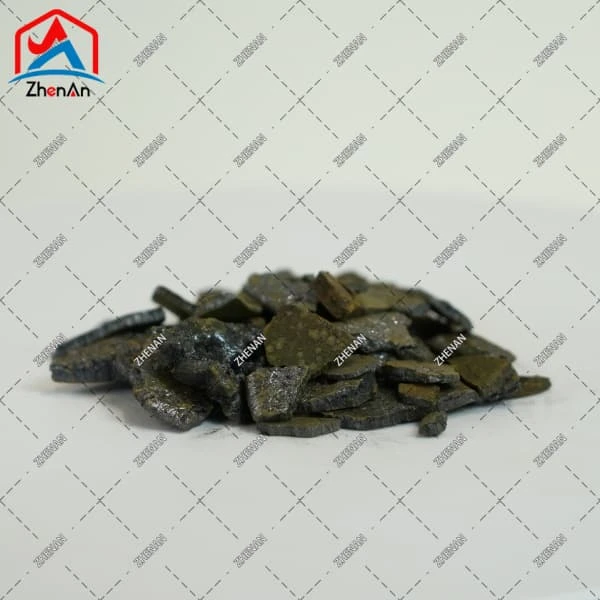
Vanadium Pentoxide (V₂O₅) is the most important commercial oxide of vanadium and the primary raw material used throughout the global vanadium industry. With the chemical formula V₂O₅, it contains vanadium in its highest stable oxidation state (+5), giving it outstanding oxidation ability, excellent catalytic activity, and high thermal stability.
As one of the most widely traded vanadium compounds, Vanadium Pentoxide serves as the starting material for manufacturing Ferro Vanadium (FeV), Vanadium Nitride (VN), Vanadium Carbide (VC), metallic vanadium, vanadium chemicals, catalysts, ceramic additives, pigments, and energy-storage materials.
Because of its versatility, Vanadium Pentoxide has become an essential industrial material for the steel industry, chemical processing, aerospace manufacturing, battery technology, environmental protection, and advanced functional materials.
Today, growing investments in renewable energy and grid-scale electricity storage have significantly increased global demand for Battery Grade Vanadium Pentoxide, particularly for the production of Vanadium Redox Flow Batteries (VRFBs).
Chemical Identity
| Property | Value |
|---|---|
| Product Name | Vanadium Pentoxide |
| Chemical Formula | V₂O₅ |
| Molecular Weight | 181.88 g/mol |
| CAS Number | 1314-62-1 |
| EC Number | 215-239-8 |
| Appearance | Yellow to orange-yellow powder, flakes or fused pieces |
| Vanadium Oxidation State | +5 |
| HS Code | 28253010 (may vary by country) |
| UN Number | According to transportation classification |
Why Is Vanadium Pentoxide So Important?
Unlike many industrial chemicals that are used directly in manufacturing, Vanadium Pentoxide acts as the central intermediate from which nearly all high-value vanadium products are derived.
A significant percentage of the world's mined vanadium eventually passes through the V₂O₅ production stage before being converted into downstream products.
Major downstream industries include:
- Steelmaking
- Ferroalloy Manufacturing
- Special Alloy Production
- Chemical Catalysts
- Sulfuric Acid Plants
- Petrochemical Catalysts
- Battery Materials
- Vanadium Redox Flow Batteries
- Titanium Alloys
- Aerospace Components
- Ceramics
- Glass Manufacturing
- Pigments
- Electronic Materials
Because of this central role, fluctuations in Vanadium Pentoxide Price often influence pricing across the entire vanadium supply chain.
Main Characteristics of Vanadium Pentoxide
Compared with many transition metal oxides, Vanadium Pentoxide offers a unique combination of chemical, physical, and catalytic properties.
Its major advantages include:
- High oxidation efficiency
- Excellent catalytic activity
- Stable crystal structure
- High melting point
- Outstanding thermal stability
- Good compatibility with alloy production
- Excellent precursor for vanadium chemicals
- High purity available for advanced applications
- Strong redox performance
- Suitable for large-scale industrial production
These characteristics explain why Industrial Grade Vanadium Pentoxide, Catalyst Grade Vanadium Pentoxide, and Battery Grade Vanadium Pentoxide have become indispensable materials across multiple industries.
Common Commercial Forms
Depending on production methods and customer requirements, Vanadium Pentoxide is available in several commercial forms.
| Product Form | Typical Application |
|---|---|
| Powder | Chemicals, catalysts, batteries |
| Flakes | Ferroalloy production |
| Granules | Easy feeding in metallurgical processes |
| Fused Pieces | Smelting applications |
| High Purity Powder | Electronic materials and battery industry |
Why Global Buyers Choose High-Quality Vanadium Pentoxide?
For metallurgical plants, catalyst manufacturers, and battery producers, selecting a reliable Vanadium Pentoxide Supplier is critical to ensuring product consistency and process efficiency.
High-quality Vanadium Pentoxide offers:
- Higher vanadium recovery
- Lower impurity levels
- More stable chemical composition
- Better catalytic efficiency
- Improved alloy quality
- Enhanced battery performance
- Consistent particle size distribution
- Reliable long-term supply
- Easier handling during industrial processing
- Reduced production costs through higher process efficiency
As demand for energy storage materials, green steel, and high-performance alloys continues to grow, Vanadium Pentoxide Manufacturers are increasingly focusing on high-purity production, strict quality control, and sustainable manufacturing technologies to meet evolving global market requirements.
Chemical & Physical Properties of Vanadium Pentoxide (V₂O₅)
Understanding the Properties of Vanadium Pentoxide
The exceptional performance of Vanadium Pentoxide (V₂O₅) in metallurgy, catalysis, energy storage, and advanced materials is directly related to its unique chemical and physical properties. As the most stable oxide of vanadium, Vanadium Pentoxide exhibits a combination of strong oxidizing ability, excellent redox behavior, high thermal stability, and versatile crystal chemistry.
These characteristics enable Vanadium Pentoxide to function not only as an industrial raw material but also as a highly efficient catalyst, alloying precursor, ceramic additive, and electrochemical active material.
Whether used in Ferro Vanadium production, Vanadium Redox Flow Batteries (VRFBs), sulfuric acid catalysts, or specialty chemicals, understanding the properties of V₂O₅ is essential for selecting the appropriate grade and optimizing industrial performance.
Basic Chemical Properties
| Property | Typical Value |
|---|---|
| Chemical Name | Vanadium Pentoxide |
| Chemical Formula | V₂O₅ |
| Molecular Weight | 181.88 g/mol |
| CAS Number | 1314-62-1 |
| Appearance | Yellow to orange-yellow crystalline solid |
| Crystal System | Orthorhombic |
| Density | Approximately 3.36–3.40 g/cm³ |
| Melting Point | Approximately 690°C |
| Boiling Point | Decomposes before boiling |
| Oxidation State of Vanadium | +5 |
| Solubility in Water | Slightly soluble |
| Solubility in Alkalis | Readily soluble |
| Solubility in Acids | Soluble in strong acids under suitable conditions |
Crystal Structure
One of the defining characteristics of Vanadium Pentoxide is its layered orthorhombic crystal structure.
Each vanadium atom is coordinated with oxygen atoms to form distorted VO₅ square pyramids, which connect together to create layered sheets. Weak interactions between these layers allow certain ions to be inserted or extracted, making V₂O₅ an attractive material for electrochemical applications.
This layered structure contributes to:
- High catalytic activity
- Excellent ion diffusion
- Strong oxidation capability
- Good lithium-ion intercalation
- Efficient electron transport
- Stable crystal framework at elevated temperatures
These properties explain why High Purity Vanadium Pentoxide is widely used in battery materials, lithium-ion research, and Vanadium Redox Flow Battery technologies.
Oxidation and Redox Properties
The oxidation state of vanadium in Vanadium Pentoxide is +5, representing the highest stable oxidation state under normal industrial conditions.
A major advantage of V₂O₅ is its ability to undergo reversible oxidation–reduction reactions.
During industrial processes, vanadium may transition among several oxidation states:
- V²⁺
- V³⁺
- V⁴⁺
- V⁵⁺
This multivalent behavior makes Vanadium Pentoxide an outstanding redox material for:
- Industrial catalysts
- Electrochemical energy storage
- Chemical synthesis
- Environmental treatment
- Oxidation reactions
In Vanadium Redox Flow Batteries, these reversible redox reactions enable long cycle life, high safety, and stable large-scale energy storage.
Thermal Stability
Compared with many transition metal oxides, Vanadium Pentoxide demonstrates excellent thermal stability.
Under elevated temperatures, it maintains its crystal structure over a broad operating range, making it suitable for continuous industrial processing.
Its high-temperature performance is particularly important in:
- Steelmaking
- Ferroalloy production
- Catalyst manufacturing
- Ceramic sintering
- Glass production
Stable thermal behavior also contributes to consistent catalytic efficiency during long-term industrial operation.
Chemical Reactivity
Although Vanadium Pentoxide is chemically stable under normal storage conditions, it readily participates in various industrial chemical reactions.
Typical reactions include:
- Oxidation reactions
- Reduction to lower vanadium oxides
- Reaction with alkalis to form vanadates
- Dissolution under acidic conditions
- Reduction to metallic vanadium
- Formation of specialty vanadium compounds
These reactions form the basis of modern vanadium chemical manufacturing and enable the production of numerous downstream products.
Manufacturing Process of Vanadium Pentoxide (V₂O₅)
How Is Vanadium Pentoxide (V₂O₅) Produced?
Vanadium Pentoxide (V₂O₅) is manufactured through a series of extraction, purification, and calcination processes that convert vanadium-bearing raw materials into high-purity vanadium oxide.
Although production technologies vary among manufacturers, the overall objective remains the same: maximize vanadium recovery, remove impurities, and produce a stable, high-purity Vanadium Pentoxide suitable for metallurgy, catalyst production, battery materials, and specialty chemical applications.
Modern Vanadium Pentoxide Manufacturers continuously optimize their production lines to improve recovery efficiency, reduce energy consumption, minimize environmental impact, and ensure consistent product quality.
Depending on the raw material source, several industrial production routes are commonly used worldwide.
Main Raw Materials for Producing Vanadium Pentoxide
Industrial production of Vanadium Pentoxide begins with vanadium-bearing resources. The most common feedstocks include:
| Raw Material | Characteristics | Main Regions |
|---|---|---|
| Vanadium Titanomagnetite | Primary vanadium ore, high reserves | China, South Africa |
| Spent Catalysts | Secondary resource with high vanadium content | Global recycling industry |
| Petroleum Residues | Rich in vanadium from crude oil refining | Middle East, Americas |
| Vanadium Slag | By-product of steelmaking | China |
| Stone Coal | Low-grade vanadium resource requiring complex extraction | China |
Typical Production Flow of Vanadium Pentoxide
Although production details differ among manufacturers, the general process follows these stages:
Step 1 – Raw Material Preparation
Before extraction begins, raw materials are crushed, screened, blended, and analyzed to ensure a consistent vanadium content.
Proper preparation improves extraction efficiency and reduces fluctuations during downstream processing.
For recycled materials such as spent catalysts, pretreatment may also include removing oil, sulfur compounds, or other contaminants.
Step 2 – Roasting
Roasting converts vanadium into water-soluble compounds.
This is one of the most important stages in Vanadium Pentoxide Production.
The raw material is mixed with sodium salts such as sodium carbonate or sodium chloride and heated at high temperatures.
During roasting:
- Vanadium changes into soluble sodium vanadate.
- Iron, titanium, and other impurities remain largely insoluble.
- Extraction efficiency increases significantly.
Modern roasting systems are designed to maximize vanadium recovery while reducing energy consumption and emissions.
Step 3 – Leaching
Following roasting, the calcined material undergoes leaching.
Water or dilute acid dissolves the soluble vanadium compounds while leaving most gangue materials behind.
Key objectives include:
- Maximizing vanadium extraction
- Minimizing impurity dissolution
- Producing a stable vanadium-rich solution
- Preparing for chemical purification
Step 4 – Purification
The vanadium solution contains impurities such as:
- Iron
- Aluminum
- Silicon
- Phosphorus
- Chromium
- Calcium
Various purification techniques-including pH adjustment, solvent extraction, ion exchange, and selective precipitation-are used to remove these impurities.
Purification is especially critical for producing Battery Grade Vanadium Pentoxide and Catalyst Grade Vanadium Pentoxide, where even trace contaminants can affect performance.
Step 5 – Precipitation
After purification, vanadium is recovered as ammonium metavanadate (NH₄VO₃) or similar intermediate compounds through controlled precipitation.
Careful control of temperature, pH, and reaction time helps ensure:
- High purity
- Uniform particle size
- Excellent filtration properties
- Stable downstream calcination
Step 6 – Drying and Calcination
The precipitated intermediate is dried and calcined at controlled temperatures.
During calcination:
- Ammonia and water are removed.
- Crystal structure develops.
- High-purity Vanadium Pentoxide (V₂O₅) forms.
Depending on customer requirements, the product may then be processed into:
- Powder
- Flakes
- Granules
- Fused pieces