


What Are the Main Applications of Ferro Silicon?
Ferro Silicon (FeSi) is one of the most widely consumed ferroalloys in the global metallurgical industry. Thanks to its excellent deoxidizing ability, stable alloying performance, and high silicon content, it has become an essential material for steel producers, foundries, magnesium plants, and welding consumable manufacturers.
Unlike many alloy materials that serve a single purpose, Ferrosilicon performs several important metallurgical functions at the same time. It removes oxygen from molten steel, supplies silicon as an alloying element, improves metal cleanliness, enhances mechanical properties, promotes graphite formation in cast iron, and even acts as a reducing agent during magnesium production. Because of these multiple functions, demand for Ferro Silicon continues to grow alongside the development of the global steel and manufacturing industries.
Today, FeSi75, FeSi72, and FeSi70 are the most commonly used grades. Each grade is selected according to the required silicon content, production process, and product quality requirements. Choosing the appropriate Ferro Silicon grade helps manufacturers improve production efficiency, reduce alloy consumption, and achieve more consistent metallurgical results.
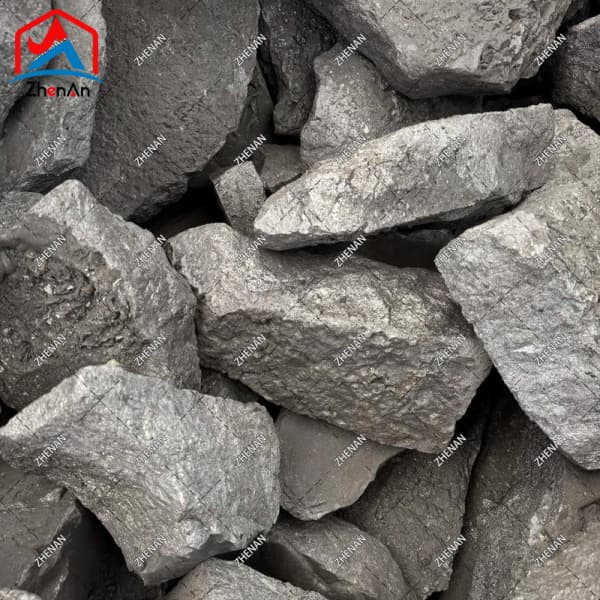
Ferro Silicon in Steelmaking
The largest application of Ferro Silicon is in the steelmaking industry. During steel production, molten steel contains dissolved oxygen that can react with alloying elements and form harmful oxide inclusions. These inclusions reduce steel cleanliness, lower mechanical performance, and increase the risk of casting defects.
Adding Ferrosilicon before or during secondary refining effectively removes dissolved oxygen through a rapid deoxidation reaction. The generated silicon oxides separate into the slag, leaving cleaner molten steel with improved fluidity and more stable chemical composition.
Besides deoxidation, silicon also serves as an alloying element. It increases tensile strength, yield strength, elasticity, oxidation resistance, and electrical properties while maintaining good weldability. Because of these advantages, Ferro Silicon is widely used in the production of carbon steel, alloy steel, high-strength structural steel, bearing steel, spring steel, electrical steel, and transformer steel.
Premium steel producers often select Low Aluminum Ferro Silicon to minimize alumina inclusions and meet the strict cleanliness requirements of automotive steel, pipeline steel, engineering machinery steel, and high-performance alloy steels.
Why Is Ferro Silicon an Excellent Deoxidizer?
One of the main reasons Ferro Silicon has remained indispensable in modern steelmaking is its outstanding deoxidizing efficiency. Silicon has a much stronger affinity for oxygen than iron, allowing it to react rapidly with dissolved oxygen in molten steel.
Compared with many other deoxidizing materials, Ferrosilicon offers several important advantages:
- Fast deoxidation reaction
- High oxygen removal efficiency
- Stable alloy composition
- Reduced non-metallic inclusions
- Improved steel cleanliness
- Lower alloy consumption
- Better casting performance
- Higher production efficiency
Because of these benefits, Ferro Silicon is often used together with Ferromanganese, Silicon Calcium, or Aluminum during secondary metallurgy to achieve precise oxygen control and optimize steel quality.
Ferro Silicon in Foundry and Casting
The foundry industry is the second-largest consumer of Ferro Silicon after steelmaking. In iron casting, Ferrosilicon is valued not only as an alloying material but also as a highly effective inoculant. It plays a critical role in controlling graphite formation, refining the microstructure, and improving the overall quality of cast iron products.
During the solidification of molten iron, the addition of Ferro Silicon promotes the formation of fine, evenly distributed graphite while suppressing the development of undesirable carbides. This results in castings with better mechanical properties, improved machinability, higher dimensional stability, and reduced shrinkage defects.
Different casting processes require different types of Ferrosilicon. Standard grades are widely used for general gray iron production, while specialized inoculants containing calcium, barium, zirconium, or rare earth elements are often selected for high-performance castings where consistent graphite morphology is essential.
Because of its ability to improve casting quality without significantly increasing production costs, Ferro Silicon remains one of the most important materials in modern foundry operations.
Ferro Silicon for Gray Iron and Ductile Iron
The performance of gray iron and ductile iron depends heavily on graphite morphology. Even slight changes in graphite distribution can significantly affect strength, toughness, wear resistance, and machining performance.
When added during inoculation, Ferro Silicon increases the number of graphite nucleation sites, encourages uniform graphite growth, and reduces the formation of chilled structures. This leads to improved tensile strength, higher elongation, better impact resistance, and more consistent casting quality.
For ductile iron, maintaining stable nodular graphite formation is especially important. High-quality Ferrosilicon inoculants help increase the nodularity rate, reduce casting defects, and improve the reliability of components used in automotive parts, wind power equipment, construction machinery, hydraulic systems, and municipal infrastructure.
As modern foundries continue to pursue lighter, stronger, and more durable castings, demand for high-performance Ferro Silicon inoculants continues to increase worldwide.
Ferro Silicon in Stainless Steel Production
In the production of stainless steel, Ferro Silicon serves multiple metallurgical functions. Besides removing oxygen from molten steel, it supplies silicon as a controlled alloying element that improves oxidation resistance, high-temperature performance, and corrosion resistance.
The quality requirements for stainless steel are generally higher than those for ordinary carbon steel. Therefore, manufacturers usually select high-purity Ferro Silicon with tightly controlled levels of phosphorus, sulfur, aluminum, and other impurities. Stable chemical composition helps minimize inclusion formation and supports consistent steel quality throughout the refining process.
Different stainless steel grades require different silicon levels. By adjusting the addition of Ferrosilicon, steelmakers can optimize alloy composition while maintaining production efficiency and cost competitiveness.
Ferro Silicon in Magnesium Production
Outside the steel industry, one of the most important applications of Ferro Silicon is magnesium production using the Pidgeon Process.
In this process, Ferrosilicon functions as a reducing agent, reacting with calcined dolomite under high-temperature and vacuum conditions to release metallic magnesium. The efficiency of this reaction depends heavily on the silicon content, purity, particle size, and chemical stability of the Ferro Silicon used.
Most magnesium producers prefer FeSi75 because of its high silicon content and reliable reducing performance. Consistent chemical composition improves magnesium recovery, reduces energy consumption, shortens production cycles, and helps maintain stable product quality.
As lightweight materials become increasingly important in the automotive, aerospace, and electronics industries, demand for high-quality Ferro Silicon used in magnesium smelting continues to expand.
Advantages of Ferro Silicon
One of the main reasons Ferro Silicon remains one of the most widely used ferroalloys is its ability to deliver multiple metallurgical benefits with a relatively low alloy addition. Compared with many alternative alloying materials, Ferrosilicon offers an excellent balance between performance, cost efficiency, and process stability.
For steel producers, foundries, and magnesium manufacturers, selecting high-quality Ferro Silicon can improve product consistency while reducing production costs and alloy consumption. Stable chemical composition also minimizes process fluctuations and helps manufacturers maintain predictable metallurgical results over long production campaigns.
Key advantages of Ferro Silicon include:
- Excellent deoxidizing performance
- High silicon recovery
- Stable alloy composition
- Low impurity content
- Improved steel cleanliness
- Enhanced casting quality
- Higher production efficiency
- Lower alloy consumption
- Excellent thermal stability
- Reliable metallurgical performance
These advantages make Ferro Silicon suitable for both large integrated steel mills and specialized foundries that require consistent product quality and efficient production.
How to Choose the Right Ferro Silicon Grade?
Selecting the appropriate Ferro Silicon grade depends on the production process, product quality requirements, and metallurgical objectives. Although FeSi75, FeSi72, and FeSi70 are all widely used, each grade offers different advantages for specific applications.
- FeSi75 is generally preferred for applications requiring higher silicon recovery, cleaner steel, and stronger deoxidizing performance. It is commonly used in alloy steel, stainless steel, engineering steel, and magnesium production.
- FeSi72 provides a good balance between cost and performance. It is suitable for many standard steelmaking operations, continuous casting, and general foundry applications where stable quality and competitive pricing are equally important.
- FeSi70 is often selected for conventional carbon steel production and general casting applications. Its lower silicon content makes it a cost-effective solution for processes that do not require maximum deoxidizing efficiency.
In addition to silicon content, buyers should also evaluate impurity levels, particle size, packaging options, production consistency, and supplier quality management when selecting a reliable Ferro Silicon supplier.
Common Particle Sizes of Ferro Silicon
To meet the requirements of different metallurgical processes, Ferro Silicon is supplied in a wide range of particle sizes. Choosing the correct size improves alloy recovery, feeding efficiency, and reaction speed during steelmaking or casting.
Common commercial particle sizes include:
- 0–1 mm
- 0–3 mm
- 1–3 mm
- 3–10 mm
- 10–50 mm
- 10–100 mm
Customized sizes available
Fine Ferrosilicon powder is commonly used in welding consumables, cored wire production, and specialized metallurgical applications. Medium-sized particles are suitable for most steelmaking operations, while larger Ferro Silicon lumps are widely used in electric arc furnaces and magnesium production.
Reliable suppliers can also provide customized particle size distributions according to customer equipment, feeding systems, and production requirements.
Packaging and Transportation of Ferro Silicon
Proper packaging is essential to protect Ferro Silicon during storage, transportation, and international shipping. Moisture contamination, mechanical damage, and particle segregation can affect handling efficiency and product quality if packaging is inadequate.
Most Ferro Silicon suppliers offer several packaging options, including:
- 25 kg bags
- 1 MT jumbo bags
- Bulk packaging
- Customized packaging with customer labels
For export shipments, products are usually packed in moisture-resistant bags and loaded on pallets or directly into containers. Proper storage in a dry and well-ventilated warehouse helps maintain product quality and prevents unnecessary oxidation during long-distance transportation.

Global Ferro Silicon Market Trends
The global Ferro Silicon market continues to expand as demand for high-quality steel, advanced casting materials, and lightweight alloys increases. Growing investment in infrastructure, renewable energy, transportation, and industrial manufacturing has created steady demand for reliable Ferrosilicon products across many regions.
The steel industry remains the largest consumer of Ferro Silicon, accounting for the majority of global consumption. At the same time, the foundry sector continues to require large volumes of Ferrosilicon inoculants for the production of gray iron, ductile iron, and precision cast components. Outside traditional metallurgy, magnesium production, welding materials, and powder metallurgy also contribute to the growing demand for high-quality Ferro Silicon.
International buyers increasingly focus on consistent chemical composition, stable supply capacity, technical support, and compliance with quality standards. As a result, manufacturers that combine modern production technology with strict quality control are better positioned to serve long-term customers in competitive global markets.
How to Choose a Reliable Ferro Silicon Supplier?
Choosing the right Ferro Silicon supplier is just as important as selecting the correct alloy grade. A reliable supplier not only delivers products that meet technical specifications but also helps customers maintain stable production and reduce long-term operating costs.
When evaluating a potential supplier, buyers should consider several key factors:
- Consistent chemical composition across different production batches.
- Stable manufacturing capacity to support long-term supply.
- Strict quality control throughout production and inspection.
- Flexible particle size options for different metallurgical processes.
- Reliable packaging suitable for international transportation.
- Technical support for alloy selection and application.
- Responsive communication and on-time delivery.
- Experience in international export markets and compliance with customer requirements.
Many buyers also request inspection reports, certificates of analysis, or third-party testing before shipment to ensure that every batch meets agreed specifications.
A professional Ferro Silicon manufacturer understands that long-term cooperation is built on product consistency, transparent communication, and dependable service rather than price alone.
Why Consistent Ferro Silicon Quality Matters?
In metallurgical production, consistency is often more valuable than occasional high performance. Even when the average chemical composition meets specification, excessive variation between production batches can affect deoxidation efficiency, alloy recovery, casting quality, and process stability.
Stable Ferro Silicon helps steelmakers maintain predictable furnace conditions, reduces unnecessary alloy adjustments, and improves production efficiency. Foundries benefit from more consistent graphite formation and fewer casting defects, while magnesium producers achieve more stable reduction performance and improved metal recovery.
For these reasons, experienced buyers often prioritize suppliers capable of delivering uniform quality over many shipments rather than focusing solely on the lowest purchase price.
Future Outlook of Ferro Silicon

As steel production continues to evolve toward cleaner manufacturing, higher-quality alloys, and greater energy efficiency, the role of Ferro Silicon is expected to remain essential. Advances in electric furnace technology, secondary metallurgy, continuous casting, and intelligent process control will continue to increase the demand for high-performance Ferrosilicon with stable composition and low impurity levels.
At the same time, growing applications in renewable energy equipment, electric vehicles, infrastructure development, and advanced manufacturing are creating new opportunities for the global Ferro Silicon industry. Manufacturers that focus on quality, technical innovation, and sustainable production are likely to remain competitive in the years ahead.