


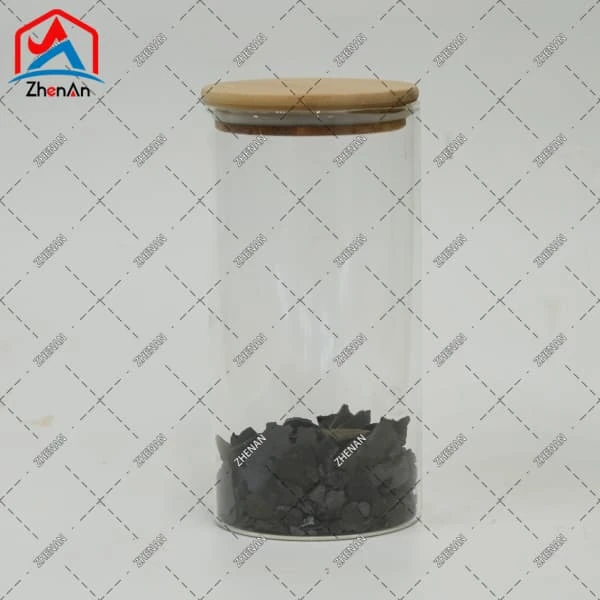


Vanadium Pentoxide Flakes (V₂O₅)
📦 Product Overview
Compared to powdered forms, V₂O₅ flakes offer significant advantages for metallurgical applications: low loss on ignition, low sulfur content, low dust generation, and high bulk density. These properties make flakes the preferred feedstock for electric arc furnace steelmaking and downstream alloy production.
📊 Over 80% of global vanadium consumption enters the steel industry in flake form, making V₂O₅ flakes the benchmark product for vanadium pricing and international trade.
📋 Technical Specifications
Grades & Standards
Vanadium pentoxide flakes are classified according to the Chinese metallurgical standard YB/T 5304-2017 into the following primary grades:
| Grade | V₂O₅ Content (min.) | Standard | Primary Application |
|---|---|---|---|
| V₂O₅ 98.0-F | 98.0% | YB/T 5304-2017 | Ferrovanadium production |
| V₂O₅ 99.0-F | 99.0% | YB/T 5304-2017 | High-grade alloys & master alloys |
| V₂O₅ 99.5-F | 99.5% | YB/T 5304-2017 | Aerospace & premium master alloys |
Physical & Chemical Properties
Typical Impurity Limits (98% Grade)
| Impurity | Maximum Content |
|---|---|
| Silicon (Si) | ≤ 0.25% |
| Iron (Fe) | ≤ 0.60% |
| Sulfur (S) | ≤ 0.03% |
| Phosphorus (P) | ≤ 0.05% |
| Arsenic (As) | ≤ 0.02% |
| Alkalis (Na₂O + K₂O) | ≤ 1.50% |
⚙️ Key Applications & End-Use Sectors
🏭 Steel & Metallurgy (>80% of consumption)
V₂O₅ flakes are the primary feedstock for producing ferrovanadium (FeV) and vanadium‑nitrogen alloys. Vanadium is the "universal strengthener" for high-strength steels:
- Adding just 1 pound of vanadium per tonne of steel increases tensile strength by approximately 40% or more
- Widely used in high-strength rebar (meeting updated construction standards), automotive steels, pipeline steels, and tool steels
- Critical for High-Strength Low-Alloy (HSLA) steels in infrastructure and transportation
📌 Flake form offers low loss on ignition and low sulfur - ideal for EAF steelmaking
✈️ Master Alloys & Aerospace
High-purity flakes (≥99.5%) are essential for producing vanadium‑aluminum master alloys (e.g., AlV55), which are used to manufacture titanium alloys:
- Titanium alloys such as Ti‑6Al‑4V offer exceptional strength‑to‑weight ratios for jet engines, airframes, and medical implants
- VPURE+® Flakes are approved by all major master alloy producers worldwide
- The global master alloy market is growing substantially within the aerospace industry
🧪 Catalysts & Chemicals
Vanadium pentoxide is one of the most important industrial catalysts:
- Sulfuric acid production: Core catalyst in the contact process for oxidizing SO₂ to SO₃
- Selective Catalytic Reduction (SCR): V₂O₅‑TiO₂ systems for flue‑gas denitrification
- Organic synthesis: Production of phthalic anhydride, maleic anhydride, and other chemicals
- Low impurity levels are essential for catalyst performance
🔋 Energy Storage (Fastest‑Growing)
High-purity V₂O₅ is the key precursor for Vanadium Redox Flow Battery (VRFB) electrolytes:
- VRFBs offer long cycle life (>20,000 cycles), scalable capacity (MW/MWh), and high safety
- Annual growth rate estimated at > 20%, far exceeding traditional sectors
- Also used as a cathode material in lithium‑ion, sodium‑ion, and zinc‑ion batteries
🌱 VRFB is a key enabler for large‑scale renewable energy storage
🎨 Glass, Ceramics & Pigments
- Colorant: Produces yellow, blue, and green shades in ceramic glazes and glass
- Optical glass: UV‑blocking and IR‑blocking specialty glasses
- Used in enamels, magnetic materials, and black inks
💻 Electronics & Advanced Materials
- Precursor for vanadium‑doped ceramics and electronic materials
- Used in fiber optics, photonic devices, and semiconductor applications
- Consistent purity directly affects performance in advanced energy systems
🏗️ Production Process
The mainstream production route for V₂O₅ flakes is the "dehydration‑deammoniation‑fusion" three‑step process (also known as the fusion-casting method):
| Step | Process Description | Key Control Points |
|---|---|---|
| ① Raw Material Preparation | Vanadium‑bearing slag, stone coal, or spent catalysts are processed via sodium roasting, water leaching, and precipitation to obtain ammonium polyvanadate (APV) or ammonium metavanadate (AMV) | Vanadium concentration, pH, precipitation temperature |
| ② Dehydration‑Deammoniation | Ammonium salts are calcined at 300–500 °C to remove water and ammonia, yielding powdered V₂O₅ | Temperature gradient, atmosphere control, residence time |
| ③ Fusion‑Flaking | Powdered V₂O₅ is melted above 690 °C and cast onto a cooling flaker to produce solid flakes | Melt temperature, cooling rate, flake thickness control |
📌 Recent process innovations include flame vapor deposition (FVD) for advanced nanostructured V₂O₅ and improved purification techniques for high‑purity grades.
📈 Global Market & Pricing Intelligence
Supply & Demand Landscape
- China is the world's largest producer and consumer of V₂O₅ flakes, with major production hubs in Sichuan, Shaanxi, and Hebei provinces.
- Major producers: Pangang Group Vanadium & Titanium, Jinduicheng Molybdenum, Largo Inc. (Brazil), Evraz (Russia), and Bushveld Minerals (South Africa).
- V₂O₅ flakes are the benchmark trading form for international vanadium contracts.
Price Reference (2025–2026)
| Product Form | Purity | Reference Price | Data Source |
|---|---|---|---|
| V₂O₅ Flakes | 98% min | $5.80 / lb V₂O₅ (May 19, 2026) | ScrapMonster |
| V₂O₅ Flakes | 98% min | $12,010 / MT (May 19, 2026) | ScrapMonster |
| V₂O₅ Flakes | 98% | CNY 84,000–86,500 / MT (April 2026) | ZhenAn Refractories |
| V₂O₅ Flakes | 98% | ~CNY 81,000 / MT (early 2026) | Zion Technologies |
⚠️ Prices are market references only. Actual transaction prices depend on purity, volume, payment terms, and supply‑demand dynamics. The market is projected to reach USD 1.8–2.2 billion by 2025 with a CAGR of 5%–7% through 2030.
Market Outlook
After weak prices in 2024–2025 driven by sluggish steel demand, the vanadium market is expected to firm from late 2026, supported by tightening supply and growing demand from VRFB energy storage.
⚠️ Safety, Handling & Storage
Storage & Transportation
- Packaging: Typically supplied in 25 kg bags, 1 MT jumbo bags, or customized packaging
- Storage: Keep in a cool, dry, well‑ventilated warehouse, away from heat, open flames, and reducing agents
- Transportation: Classified as a hazardous material (toxic). Protect from rain, sun, and physical damage during transit
- Spill response: Wear full protective equipment, collect carefully, and dispose as hazardous waste
- Maintain airborne vanadium concentration below 0.05 mg/m³ (as V)
- Conduct regular occupational health examinations focusing on the respiratory system
- If inhaled in large quantities, move to fresh air immediately and seek medical attention
- Store in sealed containers away from moisture and incompatible materials
❓ Frequently Asked Questions
A: Flakes offer lower loss on ignition, lower sulfur content, less dust, and higher density, making them preferred for metallurgical applications (steelmaking, alloy production). Powder is more commonly used in catalysts, pigments, and fine chemicals.
A: Standard grades under YB/T 5304-2017 are V₂O₅ 98.0-F, 99.0-F, and 99.5-F. Premium products like Largo's VPURE+® Flakes offer a guaranteed 99.0% and typical 99.5% purity.
A: Chinese‑produced vanadium products are primarily exported to the United States, Canada, the Netherlands, Japan, and South Korea.
A: High‑purity V₂O₅ (flake or powder) is dissolved and processed to produce vanadium electrolyte for Vanadium Redox Flow Batteries (VRFB). This is the fastest‑growing application sector.
A: Typical dimensions are width 20–80 mm and thickness 2–8 mm. Metallurgical grades generally have a flake size no larger than 55 mm × 55 mm, with thickness ≤5 mm. A 10% tolerance on flake size and moisture content is standard.
A: Leading producers like Largo Inc. operate from one of the world's highest‑grade vanadium deposits (Maracás Menchen Mine) with a proven track record of operational excellence, providing customers with a secure and reliable source of supply.
Hot Tags: vanadium pentoxide sheets, China vanadium pentoxide sheets manufacturers, suppliers